Meet your team
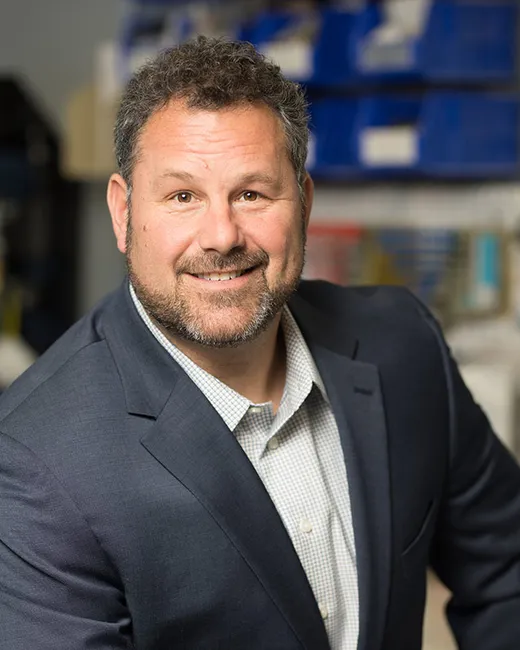
Scott Baranek
Certified Prosthetist
What inspired your interest in prosthetics?
My journey into prosthetics began first when I lost my leg in a motorcycle accident in 1992. Amputees talk about losing a limb as though it’s an actual loss, and it is. In the recovery process, you’re trying to grab as much of your life back as you can.
What was difficult about losing your limb?
Two to three months before you get a prosthetic limb is probably the darkest point. When you’re just lying in bed every day and you can’t walk, or you’re getting around in a wheelchair, you’ve got all this time to think. I was a victim of circumstances that sent my life into a spiral, and I didn’t have control. I didn’t feel that it was fair.
When did things begin to get better in your recovery process?
Once you get the prosthesis — for me, that was the first time that I felt like, “okay, this seemed like a lot of hard work, but this was my opportunity to get a little bit of control back in my life.” I think that’s why I gave 100%.
What did your prosthetic limb do for you?
The prosthesis made me feel like there was something I could do about these circumstances that I didn’t ask for.
What advice would you give to a person who just lost their limb?
What I would encourage people to do is to talk to other amputees and get information. They’ll be great resources, and of course they’re also living that experience.
What motivates you to continue doing your work?
Our patients will go out of their way — if they see other people on prosthetic limbs, they’ll ask them how they’re doing. The referrals we get through our own patients are the best testimonial we could ever have.
Ready to take your next step?
See a prosthetist who listens. We'll be in touch within 24 hours, Monday–Thursday.